
Blog
When selecting fire-retardant mesh, it’s important to consider the project’s specific fire-performance requirements. Products can be tested to recognised methods such as AS/NZS 1530.3 to demonstrate their fire-performance characteristics. Fire-retardant mesh is designed to help reduce flame spread when exposed to an ignition source. AS/NZS 1530.3:1999 provides a recognised test method for assessing the fire-performance characteristics of building materials, including ignitability, flame spread, heat evolved and smoke developed.
Fire performance is one factor when selecting mesh for a site. This guide explains what to look for in fire-test information, how to assess containment needs and how mesh materials differ. It also covers practical considerations when choosing fire retardant mesh for construction sites across Australia, including projects in Queensland, New South Wales, Victoria and South Australia.
Key Takeaways
- Review fire-performance test results as a whole. Consider factors such as ignitability, flame spread, heat evolved and smoke developed rather than relying on a single test result or a general “fire-retardant” description.
- Check the requirements for scaffold encapsulation. AS 1576.7 (Int):2021 provides industry guidance on acceptable performance criteria for the flammability of scaffold encapsulation and its safe use. SafeWork NSW also recommends that scaffold encapsulation used on site meets performance criteria set out in relevant industry standards, such as AS 1576.7. [safework.nsw.gov.au]
- Consider fire hazards as part of the overall site assessment. Potential ignition sources, combustible materials, hot works and emergency procedures should be considered alongside the containment requirements of the scaffold. SafeWork NSW highlights managing ignition sources and combustible materials when scaffold encapsulation is used. [safework.nsw.gov.au]
- Choose mesh based on the project and its intended application. Review the product’s documented fire-performance testing together with the project's specifications and site requirements. SiteSmart’s DuraSmart Mesh can be considered where a fire-retardant mesh solution is required, subject to those requirements.
Fire resistance and flammability index
Fire-retardant mesh is designed to help reduce the risk and spread of flame when exposed to an ignition source. Its fire performance should be supported by appropriate testing and considered alongside the requirements of the individual construction project.
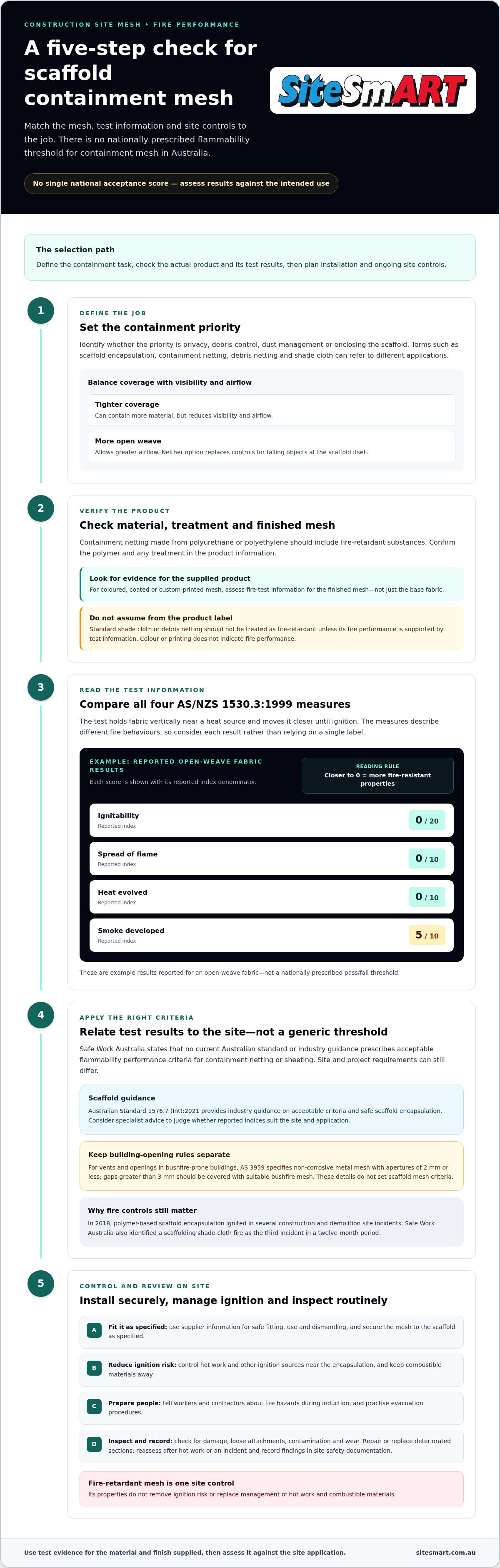
AS/NZS 1530.3:1999 provides a recognised method for assessing the fire-performance characteristics of building materials and components. It assesses four key characteristics: ignitability, flame propagation, heat release and smoke release, providing indices that can be used to evaluate a material’s performance.
When selecting fire-retardant mesh for construction sites, test results should be considered as a whole rather than relying on a single index or simply on a product being described as “fire-retardant”.
For mesh used as scaffold containment or encapsulation, AS 1576.7 (Int):2021 – Scaffolding, Part 7: Safe use of encapsulation on scaffolding provides guidance on acceptable performance criteria for flammability and the safe use of scaffold encapsulation. Site-specific risks, project specifications and the intended application should also be considered when selecting an appropriate mesh product.
There’s no single national price for construction mesh. Cost depends on mesh area, material, print requirements and attachment details. On site, mesh can contain debris, reduce falling-object exposure and enclose scaffold areas. Its fire-retardant properties don’t remove ignition risk: control hot work and keep combustible materials away.
For fire retardant mesh for construction sites Australia-wide, distinguish building openings from scaffold applications. For vents and openings in bushfire-prone buildings, AS 3959 specifies non-corrosive metal mesh with apertures of 2 mm or less. Gaps greater than 3 mm should be covered with suitable bushfire mesh. Those details don’t set scaffold mesh criteria.
Custom printing can be incorporated into Fire Retardant ScaffSmart Mesh for site branding, project identification and other project information. Where fire performance is a project requirement, the mesh should be selected based on appropriate fire-performance testing and supporting product documentation. SafeWork NSW advises that scaffold encapsulation should meet relevant industry performance criteria and that suppliers provide the results of applicable testing and information necessary for its safe use.
Fire-retardant ScaffSmart Mesh should form part of the site's overall fire-risk management strategy. It does not remove the need to manage potential ignition sources or other fire hazards around the scaffold. Particular care should be taken where work near the encapsulation could introduce an ignition source. SafeWork NSW specifically identifies controlling ignition sources near scaffold encapsulation as an important risk-management measure.
Once installed, scaffold mesh and its attachments should be monitored as part of the site's scaffold inspection and maintenance procedures. Any damage or deterioration that could affect the mesh's containment, attachment or safe use should be assessed and addressed in accordance with the project's safety requirements and the manufacturer's or supplier's information.
Scaffold containment and falling-object protection
Scaffold containment can help control dust and debris, provide screening and improve site presentation. However, covering or encapsulating scaffolding can also introduce additional fire hazards that need to be considered when selecting and using scaffold mesh. Product selection should take into account the intended application, site-specific risks and relevant fire-performance requirements.
Privacy, Debris and Dust Control Containment mesh can provide screening around work areas and help control the movement of dust and debris. Different mesh constructions provide different levels of coverage, visibility and airflow, so the appropriate product should be selected according to the requirements of the project.
Terms such as scaffold encapsulation, containment netting, containment sheeting, screening and scaffolding mesh may be used to describe products used around scaffolding. SafeWork NSW uses these terms when discussing scaffold encapsulation and associated fire risks.
When selecting mesh, consider the primary purpose of the installation, including site screening, dust management, debris containment, site branding or scaffold encapsulation, together with any applicable project and safety requirements.
Fire Performance and Scaffold Encapsulation Standard shade cloth or general-purpose debris netting should not be assumed to have suitable fire-retardant properties unless its fire performance is supported by appropriate testing and product information. AS 1576.7 (Int):2021 – Scaffolding, Part 7: Safe use of encapsulation on scaffolding provides industry guidance on acceptable performance criteria for the flammability of scaffold encapsulation and its safe use. SafeWork NSW recommends that scaffold encapsulation used on site meets performance criteria set out in relevant industry standards, such as AS 1576.7. Independent fire-property testing is an important consideration when assessing scaffold containment products. Suppliers should provide relevant product information, including applicable test results and information necessary for the safe installation, use and dismantling of the product. The importance of appropriate product selection is highlighted by construction and demolition site incidents reported by SafeWork NSW, where polymer-based scaffold encapsulation with little or no fire retardance ignited and was observed to be highly flammable. Installation and Fire-Risk Management Fire-retardant scaffold mesh should form part of the site's overall fire-risk management approach rather than being relied upon as the sole fire-control measure. SafeWork NSW advises that potential ignition sources near scaffold encapsulation should be appropriately controlled, including protection such as shields for hot work. Combustible materials should not be stored close to the encapsulation, and emergency systems and evacuation procedures should be in place and regularly tested. Site personnel and contractors should also be informed of scaffold encapsulation fire hazards during induction and trained in emergency procedures.
Installation, use and dismantling should follow the relevant product and supplier information, with consideration given to the specific risks and requirements of each construction site. For advice on selecting SiteSmart mesh for your particular application, contact SiteSmart. SiteSmart provides assistance with quotes, product selection, artwork and ordering for signage across Australia.
Fire-resistant fence mesh materials
Compare the mesh material, weave and available fire-test information with the site’s exposure and intended use. A product description alone cannot establish whether its flammability properties suit a particular application.
Flammability testing
Review test results for the mesh material and its intended use. AS/NZS 1530.3:1999 measures ignitability, spread of flame, heat evolved and smoke developed. The rating values help describe distinct fire behaviours, so consider each measure rather than relying on a single label. Lower numbers closer to 0 indicate fire-resistant properties for the indices described.
Review test results alongside the conditions they cover. Specialist advice can help determine whether the reported flammability indices suit the site and application. Testing informs selection, but does not replace controls for ignition sources or combustible materials.
Materials and finishes
Containment netting made from polyurethane or polyethylene should include fire-retardant substances. Identify the mesh polymer and any fire-retardant treatment in the product information. Then compare its weave and aperture with the required balance of visibility, airflow and containment.
For coloured, coated or custom-printed mesh, assess evidence for the finished product, not just the base fabric. Test information should relate to the material and finish being supplied. Don’t assume that colour or printing indicates fire performance.
To assess mesh against site needs, document its intended use, exposure and containment requirements. Compare these with the available test information, then seek specialist advice on suitability. This helps distinguish documented fire performance from general descriptions such as “fire resistant”.
SiteSmart: ScaffSmart Mesh
SiteSmart offers 2 types of ScaffSmart Mesh for projects comparing mesh options. For a construction site, define the mesh’s role first, such as screening, containment or another site application. Then compare the product’s information with project hazards and requirements. A product name alone doesn’t establish a fire rating, so treat documented fire performance as a separate selection criterion.
Compare each option with the intended use and the evidence required for the site. Keep fire performance, visibility and containment requirements distinct.
Contact SiteSmart to discuss mesh options for your project.
Plan your next site mesh decision
Turn the site assessment into a practical procurement brief. Record where the mesh will be used, the work activities around it and what the enclosure must achieve. Include the intended application in planning with the people responsible for scaffold planning and site safety. This gives your team a clear basis for comparing options and documenting why a product suits its intended role.
Choosing fire retardant mesh for construction sites in Australia should follow the project brief, not a product label alone. SiteSmart supplies DuraSmart Mesh, SmartMesh and WindSmart Mesh. For projects in Queensland, New South Wales, Victoria and South Australia, compare each product’s fire-performance evidence with the intended application and site requirements.
A clear brief is a practical way to move your project forward.
Frequently Asked Questions
What Australian standards apply to fire-retardant construction site mesh?
AS/NZS 1530.3:1999 covers fire tests on building materials, components and structures, while Australian Standard 1576.7 (Int):2021 provides guidance on scaffold encapsulation. According to Safe Work Australia, no current Australian standard or industry guidance prescribes acceptable flammability performance criteria for containment netting or sheeting. These references have different roles: testing material fire behaviour and guiding safe scaffold use.
What fire-retardant ratings and test certificates should buyers request?
Review test documentation to identify the mesh tested and the reported ignitability, spread-of-flame, heat-evolved and smoke-developed indices. Check that the fabric and finish documented match the product being considered, rather than relying on a general description. Include information on safe installation, use and dismantling in the assessment. These documents help assess suitability, but the listed indices alone don’t establish a universal pass threshold.
Where can I buy fire-retardant scaffold mesh in Australia?
SiteSmart offers fire-retardant mesh options. To discuss for your project contact SiteSmart about the intended scaffold application and the fire-performance evidence required.
Disclaimer
The information provided in this article is for general informational purposes only and is not intended as professional, legal, or technical advice. While every effort has been made to ensure accuracy, SiteSmart Australia makes no guarantees regarding completeness or reliability. Readers should seek professional guidance specific to their project requirements before making any decisions.